Limiter Selection: The Most Important Step in Mastering Music
Yesterday, I was working on a folk music record with simple instrumentation—mainly vocals and acoustic guitars. It can be tough to make these tracks sound just right because even a small amount of limiting can be audible.
That's where having multiple limiters comes in handy.
Here's how I handled it:
First, I tried three different limiters: Ozone, Elevate, and Weiss. I started with Ozone and got a good level. Then, I applied the same gain settings to the other limiters. After that, I compared how they affected the vocals, which was the most important part of the song. I asked myself, which limiter made the singer sound their best?
Ozone won.
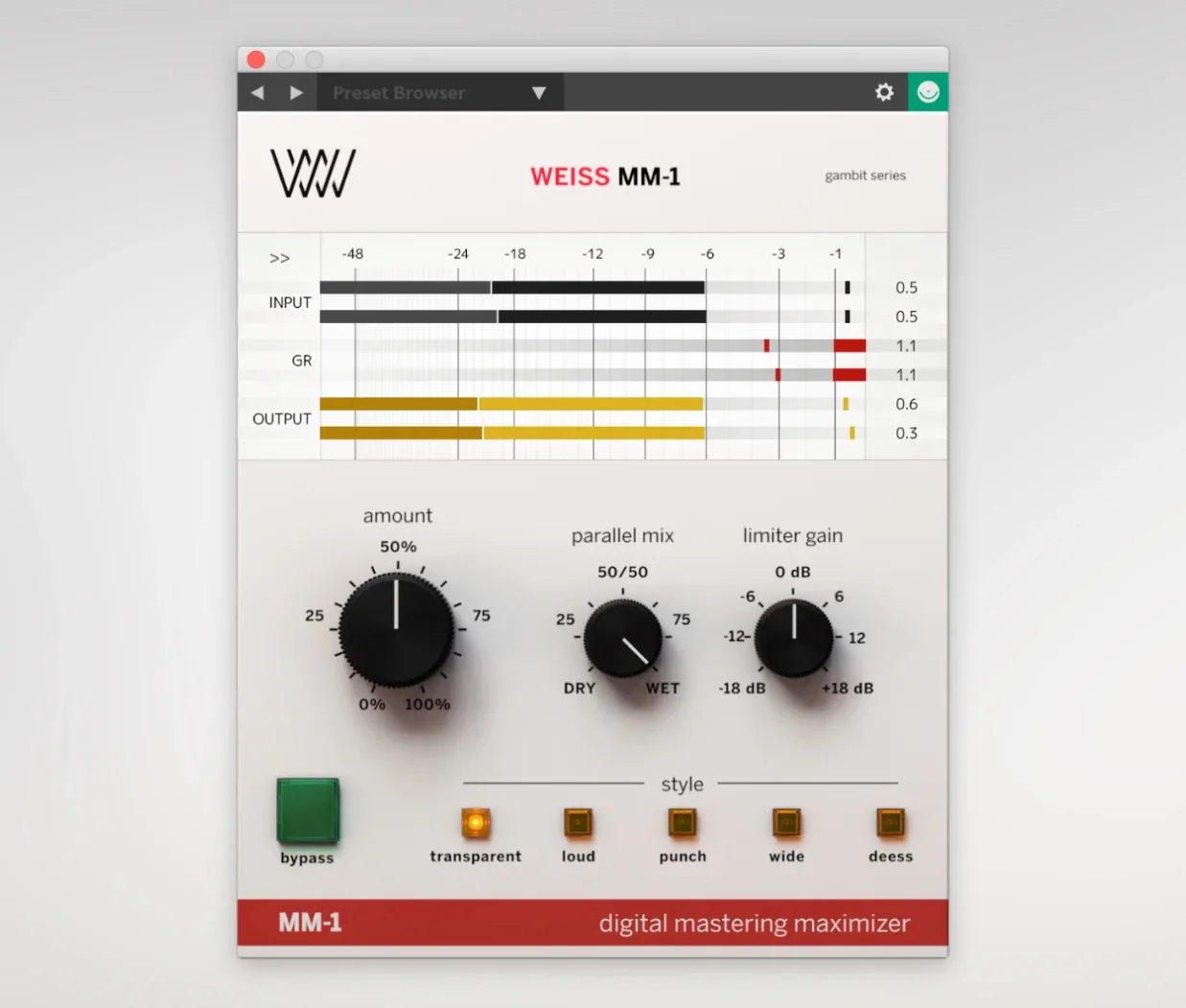
However, with this kind of music, even minimal limiting can be too much before you reach the right loudness. So, instead of forcing it with one limiter, I decided to stack another one. I tried several options and chose the Weiss this time. At this point, I had the Ozone doing the bulk of the work, going into the Weiss, which was adding an extra 1dB of gain.
But it still wasn't quite right. I tried swapping the order of the plugins. In this case, it worked better with the Weiss feeding into Ozone.
The final result was a track with the right loudness, no artefacts from the limiters, and the singer's voice was clear and dynamic.
Going through these various options also dialled in the perfect colour and tone for the record using only limiters. This meant I needed minimal EQ to get the tonal balance right. The less EQ you can get away with, the better—less phase shift and less transient distortion.
Different limiters have distinct sonic characteristics, and matching the right limiter to the material beats defaulting to whatever you always reach for. This is proven by the industry's top engineers.
If you're curious about how other mastering engineers do this, you can watch videos by Randy Merrill and Chris Gehringer on Mix With The Masters. They use multiple limiters and choose them carefully for each project. When I worked with Vlado Meller, he also stressed how important it is to pick the right limiter and settings.
This approach takes more time than using the same limiter for everything. But when you're aiming for the best possible result, auditioning different options pays off. Your limiting becomes part of the creative process, not just a technical step.
Next time you're working on a master, try this: test multiple limiters with identical settings, choose based on how they serve the most important elements in your track, and don't be afraid to experiment with stacking or reordering when needed.
The extra time spent choosing the right tool makes all the difference.
