Joe LaPorta, a 1961 Langevin Catalogue, and How to Balance Your Track with One EQ Move
Joe LaPorta made a track punchier, deeper, and more balanced with a single EQ move.
He cranked the bottom end. 4dB at 63Hz. That's it.
No other equalization. Just limiting and level.
I discovered this during my morning training routine, analyzing a rock track he'd mastered. A friend had generously sent it to me to study. Overall, the mix was great, but it felt a touch "flat" dynamically. LaPorta's simple bass boost was like magic—all of a sudden the track felt bigger, deeper, and more impactful.
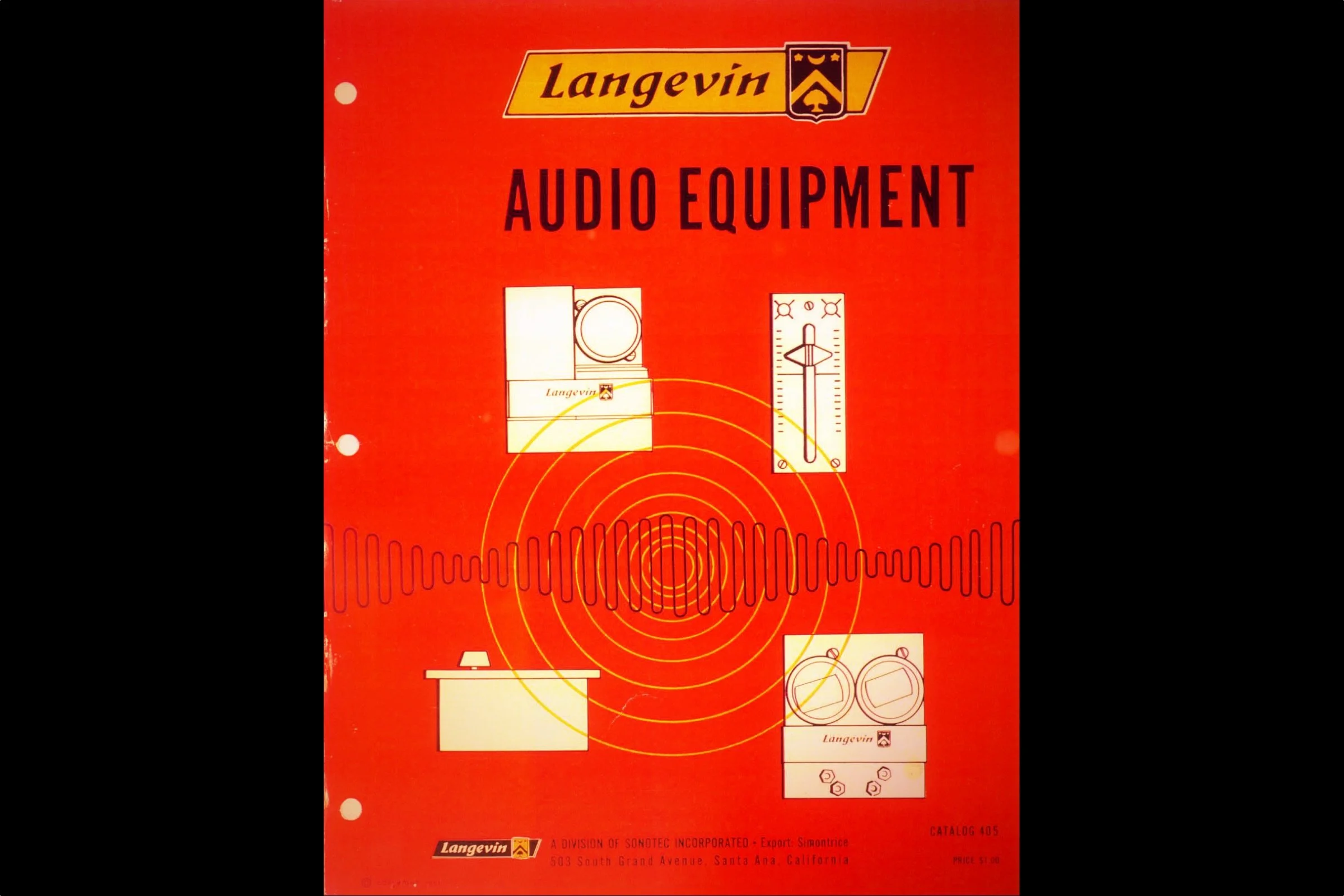
This reminded me of a passage I read in an old 1961 Langevin catalogue. This catalogue included a section on equalization, breaking down the frequency spectrum into different parts. If you've read any book on audio engineering, you're likely familiar with something similar. However, this passage was different; it was more profound than any I've read before. Unfortunately, I couldn't find an author credited in the catalogue. Nonetheless, I extend my thanks to whoever wrote this 64 years ago!
The passage that caught my attention was from the section called 'BASS-RHYTHM AND MUSICAL FOUNDATION - 3rd and 4th Octaves - 64 - 256cps': "Profound attention should be given to equalization or attenuation in this range, for the musical balance of the entire program can be controlled at 100 cps."
This is fascinating. I've experimented with this in the past and found it to be true. Adjusting just one band of equalization in this range can change the balance of the entire mix. Sometimes, that's all you need.
That's what happened with the track mastered by Joe LaPorta. The bottom end was bigger, which is what you'd expect with a big bass boost. But the whole track felt different. Bigger, fuller, and more dynamic. The most surprising part was how much better the vocals sounded! Vocals rarely have frequency components that low. They definitely didn't on this track. But somehow, with just a boost in the bottom end, the vocals felt more compelling.
If I'm being honest, I don't know why this is the case. My only theory is that a better overall balance in the track made the vocals sound better. It's just a guess.
If you want to try this, I'd recommend using an EQ plugin that has an auto-gain feature. One where the plugin will automatically adjust the gain based on your EQ moves. This way, it's very easy to hear the difference the EQ move is making to the whole track.
The Tokyo Dawn Labs VOS SlickEQ is a good one for this, and there's a freeware version. So you can try out this technique without having to spend anything.
Take your EQ and set one band to 100Hz. Even though this technique will work with other frequencies in this range, it's best to keep things simple to start. Just stick with 100Hz, and see if you can balance the track with just this band.
Listen to the track and focus on the vocal balance. Does the vocal feel too forward or is it buried?
If it's too forward, slowly increase the 100Hz band until it sits better within the track.
If it's buried, slowly decrease the 100Hz until the vocal has the clarity you're looking for.
Now, A/B with and without the EQ. The TDR plugin makes this easy, since you can have it automatically gain matched. Does the track sound better? If not, continue to refine the EQ until it does.
I think you'll find that even though this approach is incredibly simple, you'll be able to improve a track most of the time. And in many cases, this approach will end up beating more complex ones in a blind test.
If you're starting out, I would highly recommend giving this a shot. The main problem I hear from beginner mastering engineers and AI mastering algorithms—and frankly, one of my main issues when I was first starting out—is overcomplicating the processing. I think you'll find that you'll end up with better masters keeping things this simple.
Try mastering a track with one band of EQ and a limiter. You'll be surprised by what you can achieve. As the Langevin catalogue said, pay attention to the upper bass range from about 64-256Hz. Make sure it's balanced correctly. Sometimes, that's all you'll need to get your master right.
